The National Bank for Economic and Social Development (BNDES) has approved funding of R$87.2 million for a project that will restore, in a first stage, 1,300 hectares of Atlantic Forest – the equivalent of 1,800 soccer fields – in eight municipalities in the south of Bahia, with more than two million seedlings of trees native to the biome.
The BNDES funds come from the Climate Fund, linked to the Ministry of the Environment and Climate Change (MMA), which supports initiatives to mitigate the effects of climate change, such as the conservation, recovery and responsible management of forests with species native to Brazilian biomes.
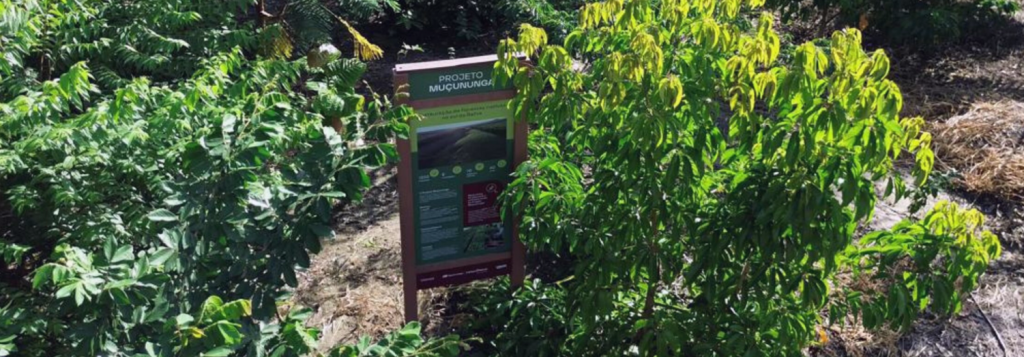
The project, named Muçununga after an ecosystem that only occurs in this region of the Atlantic Forest, will be implemented by Biomas and Carbon2Nature Brasil – Neoenergia’s joint venture with Carbon2Nature, owned by the Spanish group Iberdrola – in areas owned by Veracel Celulose.
As it is entirely focused on restoration with native species, the project will contribute to tackling the climate and biodiversity crises and will generate income and employment opportunities and other social benefits in the region. High integrity carbon credits will also be generated, with greater market value, which will be the project’s source of income. The initiative is expected to generate approximately 500,000 carbon credits over 40 years.
One of the distinguishing features of the Muçununga Project is the high diversity of native species used in the restoration of the area: there are more than 100 species, contributing to the strengthening and resilience of ecosystems. This level is well above the global average – a survey by MSCI Carbon Markets indicates that only 1% of native restoration projects aimed at generating carbon credits use more than 10 species. The benefited areas are spread across the municipalities of Belmonte, Eunápolis, Guaratinga, Itagimirim, Itapebi, Mascote, Potiraguá and Santa Luzia.
The project adopts the concept of stepping stones, in which the various polygons of native vegetation recreated by forest restoration act as connecting points in a very fragmented landscape. This action is strategic for the recovery of the Atlantic Forest in this region, by recreating habitats and facilitating connections for endangered species such as the crejuá (Cotinga maculata), the yellow-breasted capuchin monkey (Sapajus xanthosternos), the golden-faced lion tamarin (Leontopithecus chrysomelas), the northern muriqui (Brachyteles hypoxanthus), the southeastern curassow (Crax blumenbachii), the sloth (Bradypus torquatus) and the brazilwood (Paubrasilia echinata).
BNDES President Aloizio Mercadante said: “Recovering and protecting biodiversity is essential for dealing with extreme climate events. Restoring the Atlantic Forest, one of the richest biomes in the world and one of the most degraded in the country, is key to a better quality of life in these territories. Reviving the forest with attention to the needs of local communities, generating jobs and income, is the Bank’s main objective in supporting this project, following President Lula’s determination.”
For more news like this, click here.