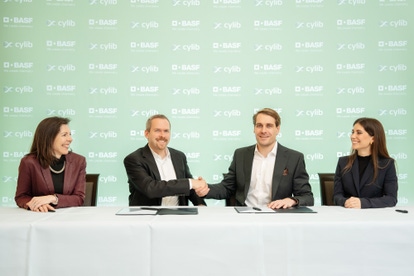
German battery recycling specialist cylib has signed an agreement to acquire BASF’s battery recycling business, expanding its industrial processing network and strengthening its position in the recovery of critical raw materials.
Announced on 23 November 2026, the transaction covers BASF’s battery recycling activities across Europe and North America, including intellectual property, customer contracts and partner relationships.
The acquisition also includes BASF’s black mass production plant and battery recycling prototype facility in Schwarzheide, Germany.
The agreement was signed on 20 November, with completion expected in the second or third quarter of 2027, subject to regulatory approvals and customary closing conditions. Financial terms have not been disclosed.
Expanding Europe’s battery recycling infrastructure
The Schwarzheide facilities will provide cylib with additional industrial processing capacity and access to established customer relationships.
The existing black mass production plant processes end-of-life batteries into an intermediate material containing valuable metals that can be recovered and returned to manufacturing supply chains.
For cylib, the acquisition represents an opportunity to extend its European recycling network while developing its capabilities across the battery recycling value chain.
Dr Gideon Schwich, Co-CEO and Co-Founder of cylib, highlighted the importance of combining BASF’s industrial experience with the company’s specialist recycling technology.
The transaction will also provide cylib with access to BASF’s North American battery recycling activities and customer relationships, supporting its expansion beyond Europe.
Operations at Schwarzheide will continue, with BASF retaining responsibility for the business until the acquisition is completed.
Recovering critical battery materials
Founded in Aachen in 2022, cylib specialises in recovering valuable raw materials from end-of-life lithium-ion batteries and battery production waste.
Its recycling technology is designed to recover materials including lithium, graphite, nickel, cobalt and manganese, which can be reused in battery production and other industrial applications.
The company reports recovery rates exceeding 90% through its existing technology, alongside a carbon footprint approximately 80% lower than primary raw material extraction. These figures are company-reported technology performance claims rather than independently verified outcomes from the acquired BASF facilities.
cylib currently operates a pilot facility in Aachen, with further industrial processing activities in Bavaria and a hydrometallurgical facility planned for Dormagen.
The addition of Schwarzheide will connect existing black mass production infrastructure with cylib’s wider plans to develop an integrated recycling network.
“Our goal is a closed European loop,” said Dr Lilian Schwich, Co-CEO and Co-Founder of cylib.
Supporting circular battery supply chains
The acquisition forms part of BASF’s decision to concentrate its Battery Materials business on cathode active materials, while transferring its recycling operations to a specialist provider.
Both companies have also expressed an intention to continue collaborating across the battery recycling industry following the transaction.
For cylib, the agreement represents another step towards establishing a European recycling system capable of recovering critical materials and returning them to industrial supply chains.
With the transaction still awaiting completion, the longer-term operational benefits remain dependent on successful integration and further development of the company’s recycling technologies.
IMAGE CREDIT – cylib / BASF