
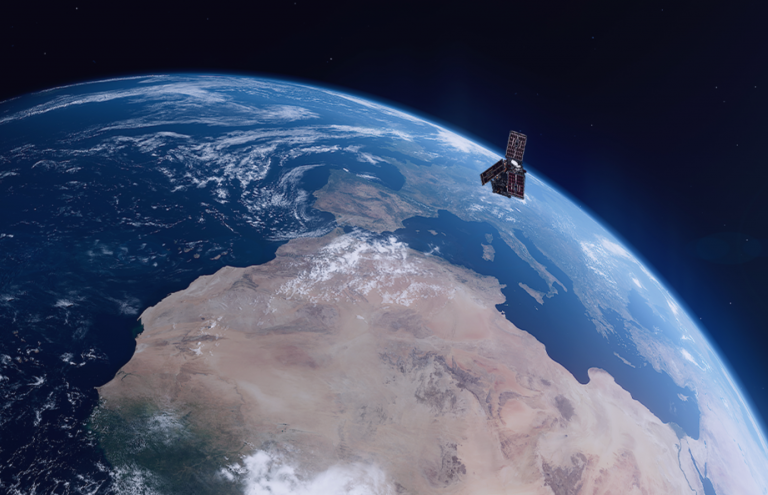
Launched on 28 November aboard a SpaceX rocket, HydroGNSS is the very first mission under the European Space Agency’s (ESA) Scout programme and is led by the UK.
Designed and built by Surrey Satellite Technology Ltd (SSTL) in Guildford, HydroGNSS is backed by £26 million in funding from the UK Space Agency. The mission highlights the UK’s industrial and scientific excellence in satellite innovation and climate monitoring.
Space Minister Liz Lloyd said: “The launch of HydroGNSS is yet another success story for British space innovation. Backed with government funding, this UK-built satellite will play an invaluable role up in space, helping tackle some of the most pressing environmental challenges we face on Earth.
“As we build the UK’s space capabilities, groundbreaking missions like HydroGNSS demonstrate that Britain is at the forefront of space technology that delivers real-world impact for people and our planet.”
Now in orbit, HydroGNSS will help scientists track how water moves around the planet. By measuring how wet or dry the ground is, identifying areas where water is pooling or flooding, detecting whether the land is frozen, and estimating how much vegetation covers the Earth’s surface, HydroGNSS will provide crucial data for weather forecasting, flood prediction and agricultural planning. These insights will also help researchers monitor the health of ecosystems and better understand the long-term impacts of a warming climate.
HydroGNSS uses an innovative technique called GNSS Reflectometry, which picks up signals from existing navigation satellites after they bounce off the Earth’s surface. This clever approach means the satellite can gather data even through thick cloud cover and dense forests, conditions that often block traditional sensors. As a result, HydroGNSS offers a cost-effective and dependable way to monitor environmental changes across the globe.
The satellites will deliver frequent, global measurements that feed into improved climate models and help researchers better understand the dynamics of the water cycle. This data will be used to assess the impact of climate change on ecosystems, inform agricultural planning, and support disaster response efforts in regions affected by droughts, floods, and other extreme weather events.
HydroGNSS complements existing missions such as ESA’s SMOS (Soil Moisture and Ocean Salinity) and Biomass, and NASA’s SMAP (Soil Moisture Active Passive), contributing to a broader international effort to monitor and mitigate environmental impacts. By providing high-value science at low cost, the mission demonstrates how small satellite technology – a key UK strength – can play a big role in tackling global challenges.
The mission highlights the UK’s growing leadership in space, which is vital for the economy and national security, as well as the strong collaboration with the European Space Agency and industry partners. The UK space sector generates an annual income of £18.6 billion and supports more than 55,000 jobs.
The successful launch comes at a pivotal moment in the evolution of the UK Space Agency, ahead of its integration into the Department for Science, Innovation and Technology (DSIT) from 1 April 2026. The merger will create a single civil space unit, streamlining strategy, policy, and delivery, building on recent achievements and ensuring the government supports the UK space sector effectively. It also comes after the UK agreed a £1.7 billion investment package in European Space Agency (ESA) programmes at the ESA Council of Ministers in Bremen, boosting the UK’s total commitment to £2.8 billion over the next decade.
The delivery of HydroGNSS further strengthens UK’s reputation as a hub for small satellite innovation, commercialisation and cutting-edge Earth observation.
For more news like this, click here.